THERAPEUTIC COUNSELING & CONSULTING


Book Reviews

BOOKS RECOMMENDED BY OUR TEAM
Reading is a powerful tool for personal growth and self-exploration. Many of our therapist engage in reading for both leisure as well as a means to staying updated and engaged in the developing and ever-growing mental health field. Here are some of our top book recommendations to support you on your journey.

Shrink Dreams: Tales from the Hidden Side of Psychiatry
By Wayne A. Myers, M.D.
Shrink Dreams offers a poignant exploration of the intersection between psychotherapy and personal transformation. Through a compelling narrative, Myers delves into the lives of therapists and their patients, unpacking the dreams, struggles, and breakthroughs that define the therapeutic journey. The book’s blend of storytelling and insight highlights the profound humanity within the therapeutic process, making it an inspiring read for both professionals and those seeking self-discovery. Whether you’re a therapist or someone interested in mental health, Shrink Dreams provides a powerful reminder of the resilience and complexity of the human mind.
Sydney Villeneuve, LPC
Therapist
Quality Assurance Specialist

Soul of Shame
by: Curt Thompson
In this book, Curt Thompson takes a scalpel to one of the most insidious and often unexamined
human experiences - shame. Shame touches each of our lives, but we often mask it with other
words like embarrassment, duty, avoidance, etc. Yet, the innocently sounding phrase "I
should..." creates more havoc in our heart than we often care to admit. Curt explores how the
stories of shame from our past keep us from living in authenticity and intimacy while strapping
our bodies with anxiety and insecurity. This book helps describe how to begin shining light on
our stories that have kept us in the dark. A specialist in interpersonal neurobiology, Curt
encourages the reader to come out of hiding by telling our story to a trusted friend, therapist, or
partner. Through that process shame will begin to transform into connection. Curt blends his
medical and theological background in this book. Although this book comes from a biblical
perspective, the emotional and interpersonal truths can be applied no matter what your faith or
spiritual background is.
Matthew Dean, Resident in Counseling
Therapist

Tales from the Couch: A Clinical Psychologist's True Stories of Psychopathology
By: Dr. Bob Wendorf, PsyD.
*Trigger warning as some descriptions of client stories are graphic*
I have always loved reading narrative accounts of client stories told through the eyes of clinicians far more experienced than I. It provides ample opportunity to get curious about different populations of clients, their unique histories, and how they navigate and overcome a variety of life stressors. It also gives insight into how different clinicians conceptualize therapy from the framework they practice within. Tales from the Couch was an interesting--and occasionally provocative-- read that other hungry therapists will find valuable even if their theoretical orientation differs from that of Dr. Wendorf.
While he utilizes behavioral therapy and family systems, his vast knowledge on neurodivergence and more stigmatized diagnoses such as Borderline Personality Disorder and Dissociative Identity Disorder--still called Multiple Personality Disorder in this book--proves useful for clinicians practicing from any and all frameworks. He uses a mix of humor (a tad outdated and mildly offensive, I will say--he began his work as a psychologist during the 1970’s and times have changed!) as well as empathy to show the humanity that all clinicians have as part of their toolkit. He also describes with great detail how he has helped many clients through skillbuilding and inner-world examination.
Take some of his descriptions with a grain of salt as language and perspectives on certain clinical areas have evolved over the years, but know that you will still find incredibly interesting and helpful content from this book!
Ashton Barnes, NCC
Resident in Counseling
Therapist

Tokens of Affection: Reclaiming Your Marriage After Postpartum Depression
By: Karen Kleiman with Amy Wenzel
Tokens of Affection: Reclaiming Your Marriage After Postpartum Depression is a heartfelt and insightful guide written for couples navigating the challenging aftermath of postpartum depression (PPD). Authored by Karen Kleiman, international maternal mental-health expert, the book offers a compassionate approach to rebuilding marital intimacy and connection in the wake of PPD. The book acknowledges the profound impact that postpartum depression can have on both partners, emphasizing the importance of understanding and empathy during this difficult period. It explores how PPD can strain relationships, causing feelings of isolation, resentment, and confusion. Through personal anecdotes, case studies, and expert advice, Kleiman skillfully illustrates the emotional journey that couples face when PPD becomes a part of their story. One of the central themes of Tokens of Affection is the concept of rebuilding trust and intimacy after PPD. Kleiman offers practical strategies for couples to communicate effectively, validate each other's experiences, and reconnect emotionally and physically. The book encourages couples to create "tokens of affection" — small, meaningful gestures that symbolize love, support, and commitment — to rebuild and strengthen their bond.
Jenna Ham, LPC, PMH-C, CSAC
Therapist

Attached to God
By: Krispin Mayfield, LPC
This book is a great starting place to exploring how our attachment style impacts our spiritual experience. It guides us through spiritual attachment and ways in which our existential fears of abandonment can impact our sense of worth and deservingness for divine relationship and unconditional loving support. If you are in a place of interest and curiosity of both exploring attachment styles and faith, this book serves as a hand to hold when navigating this journey.
Sydney Villeneuve, LPC
Therapist
Quality Assurance Specialist

Almost Anorexic: Is My (Or My Loved One's) Relationship with Food a Problem?
By: Jennifer Thomas and Jenni Schaefer
Jennifer Thomas and Jenni Schaefer write this book to emphasize that disordered eating, body image, and relationship with food exist on a spectrum as opposed to being black-and-white (“normal eating” vs. having a diagnosed eating disorder). The authors do a great job offering tools, psychoeducation, encouragement, self-reflection, inclusivity, compassion, and lived experience throughout the book. This book is written for anyone that may not believe they are “sick enough” or may not have met criteria for an eating disorder but still struggle with food, eating, and body image.

The Wisdom of Your Body: Finding Healing, Wholeness, and Connection through Embodied Living
by: Hillary McBride, PhD
Hillary McBride blends authenticity and humanness related to her personal experiences as well as digestible and informative research and history on the mind-body connection, our survival responses, and ways to reclaim our understanding of our physical selves in this incredibly profound book. She provides psychoeducation to readers on how humans have evolved from primitive and survival-focused creatures to multifaceted and exceptionally intelligent beings, but also notes that trauma - physical, emotional, generational, systemic, etc - can disrupt our internal system in such a way that we can become disconnected from our body and its needs. She helps readers gain insight on how their external experiences impact their internal functioning, and gently implores us to slow down at the end of each chapter to practice embodiment in the present moment. This allows readers to actually experience the words she is speaking, rather than just read them. Additionally, this book is incredibly valuable for both the therapy seeker and the therapist. Clients may find this as an informative healing tool that also teaches them they are not alone in their experiences, and clinicians may benefit from integrating more mindful body-based practices into their trauma-informed work. This is a book that I plan to keep in my back pocket for the rest of my career.
Ashton Barnes, NCC
Resident in Counseling
Therapist

No Bad Parts: Healing Trauma and Restoring Wholeness with the Internal Family Systems Model
By: Richard C. Schwartz, PhD
No Bad Parts explores Internal Family Systems and how to treat our mind and our bodies as a family with parts that have their own voice, story, and purpose. It breaks it down into exiles (parts that carry pain) and managers/firefighters (protectors). These protector parts can include: people pleasing; hypervigilance; inner critics; numbing; avoidance, or even perfectionism, and their jobs are to keep our hurt/wounded parts hidden and exiled to avoid feeling pain. Richard Schwartz emphasizes that we have no bad parts, and by getting in touch with our calm, compassionate, confident, and wise “Self,” we can get to know ourselves fully and truly listen to, soften, and heal any deep hurt we may have.
Janelle De Guzman
Resident in Counseling
Therapist

A Grief Observed
By: C.S. Lewis
This book was written after the death of his wife, and this brief but powerful book offers an unfiltered look at grief as it is truly experienced—messy, unpredictable, and deeply personal.
Lewis’s honesty is what makes this work so impactful. He openly expresses shock, anger, doubt, and longing, giving readers permission to recognize these feelings in themselves. Many who are grieving find comfort in seeing their own thoughts reflected on the page, especially when they worry their grief is “too much” or somehow wrong. Rather than offering solutions, the book creates space for grief to exist as it is. It reminds readers that there is no linear path through loss and that difficult emotions are a natural response to love.
Maria DeBonis-Richards, MSED,CT
Resident in Counseling
Certified in Thanatology: Death, Dying, Loss & Bereavement

ADHD 2.0: New Science and Essential Strategies for Thriving with Distraction--from Childhood through Adulthood
By: Edward M. Hallowell M.D., John J. Ratey M.D.
Dr. Edward M. Hallowell and Dr. John J. Ratey, authors of Driven to Distraction, a groundbreaking bestseller that introduced the concept and experience of ADD/ADHD to the world over twenty years ago, are back to share more about this diagnosis through updated scientific studies and behavioral interventions.
No matter what your experience with ADHD is, this book will be helpful. Through practical and accessible language, Hallowell and Ratey share the science of ADHD neurology with a strengths-focused and positive approach to living well. Information is shared for parents of children with ADHD, partners, and individuals who are struggling to understand the challenges their neurodiversity creates in their daily lives.
Consider this book if you’re looking to gain more than a basic understanding of ADHD. Loaded with information and encouragement, it’s a great starting point for many. It will also likely increase your curiosity about more ways to support your child, partner, or self, and point you in the direction of additional resources.
Shanon Deyerle, M.Ed.
Resident in Counseling
Therapist

Seeing in the Dark
Myths & Stories to Reclaim the Buried Knowing Woman
By Clarissa Pinkola Estés
Seeing in the Dark by Clarissa Pinkola Estés offers a transformative exploration of how women can find healing, meaning, and strength in their darkest moments. Drawing on her background as a Jungian psychoanalyst and storyteller, Estés blends myth, folklore, and personal wisdom to guide readers through the often painful process of facing life’s difficulties with courage and resilience. The book is particularly beneficial for those navigating grief, trauma, or significant life transitions. Estés gently reminds readers that darkness is not something to fear but a space for profound growth and renewal. Through captivating narratives, she illustrates how ancient stories can serve as a mirror for our inner struggles, offering pathways to healing. “Seeing in the Dark” can spark meaningful conversations about resilience, self-compassion, and the importance of reframing adversity. The book encourages women to reflect on their own experiences and consider how storytelling, both personal and communal, can foster connection and transformation. Estés’ compassionate tone and timeless insights provide comfort and validation for those on a healing journey.This book is a touchstone to embrace when exploring your inner strength and find light even in the darkest chapters of life.
Sydney Villeneuve, LPC
Therapist
Quality Assurance Specialist

Stop Overthinking
by Nick Trenton
Nick Trenton, an expert in behavioral psychology, wrote Stop Overthinking to simply lay out 23 techniques for those who struggle with overthinking or rumination. He draws from Cognitive Behavioral Therapy (CBT), mindfulness, stress management, and some Dialectical Behavioral Therapy (DBT) Acceptance and Commitment Therapy (ACT) techniques to help readers build awareness, learning cognitive skills/Socratic questioning, practice staying present in the moment, learn to regulate emotions, allow uncomfortable thoughts and feelings to exist, and take small, consistent actions that align with our values even when motivation is low. This book is a practical resource for those looking for straightforward suggestions for managing stress and rumination.

Man's Search for Meaning by Victor Frankl
A heavy but necessary read, especially during difficult and scary times. Written by a survivor of the Holocaust, this book is full of existentialist ideals about the limits of the human condition (i.e. how every single human can expect suffering during their lifetime). Dr. Frankl details his experiences in concentration camps whilst exploring the true power of love and the resilience of the human spirit; and above all else, the deep wantingness to live that exists inside us, even in the darkest of times under uncertain and hellish circumstances. This book inspires hope in that despite enduring unimaginable loss and hardship, we as humans can and will fight for life.
Julia Wellons, Resident in Counseling
Therapist

Befriending Your Body
by: Ann Saffi Biasetti
Befriending Your Body is for those who may struggle with disordered eating patterns and feel constantly at war with their bodies. This book inspires readers who are wishing to reconnect with their bodies in a kinder, gentler, and more compassionate way. Biasetti is a therapist and scholar who offers somatic exercises and journal prompts to help you be curious about your body rather than critical. She emphasizes that we don’t need a perfect body; we just need to develop a healthier relationship with it.
Resident in Counseling
Therapist

Fair Play – A Game-Changing Solution for When You Have Too Much to Do (and More Life to Live)
by Eve Rodsky
Rodsky discusses her own frustrations with keeping her family’s lives and household running when she felt unsupported by her husband and overwhelmed by society's expectations for mothers. Rodsky explores larger society gender messages, such as the “shefault parent” and how unpaid invisible work has historically and disproportionally fallen on women to bear. She also explores why the default parent often believes they ‘should’ be ‘doing it all.’ Out of a desire for a more equitable division of the mental load and invisible labor within her home, Rodsky created the Fair Play “game” which she outlines in this book. This game was designed to help couples identify, share, and create standards for household tasks, child-rearing tasks, and invisible work tasks. Due to Rodsky having a specific audience in mind when writing this book (i.e., married mothers with children in the home who believe there is an imbalance in task division), it would be the most beneficial for this audience.
Jenna Ham, LPC, CSAC
Therapist

Women Who Run with the Wolves
Myths and Stories of the Wild Woman Archetype
By Clarissa Pinkola Estés, PhD
This book is a classic, and loyal door to visit and return to when exploring and tuning our feminine psyche. It explores the ways in which the wild feminine is tamed through our societal systems and valued domestic roles. It guides us to the routes in reclaiming our grounded and wild innate selves that promises us women deep attunement to self. This book utilizes story telling and mindful consideration of what attunement to our wild feminine should feel like and how this is foundational to our self concept and self worth. This book starts a primal fire that ignites motivation to spend intentional time with our wild spirit and towards the work needed to not lose our spark as women.
Sydney Villeneuve, LPC
Therapist
Quality Assurance Specialist

Eating in the Light of the Moon
By: Anita Johnston, PhD
Eating in the Light of the Moon utilizes compassion; research; poetic tone; myth, and metaphor to explore disordered eating. Dr. Anita Johnston, a clinical psychologist, gives a unique perspective on body image; eating; food, and women.
The book explores the deeper “hunger” behind disordered eating--which can include emotional, spiritual, or relational needs that are unmet--as opposed to a lack of willpower. Dr. Johnson uses symbolic language and draws from numerous theories and fairytales to help readers reclaim their voice; reconnect with themselves; increase their self-awareness, and boost their self-compassion and self-worth.
Janelle De Guzman
Resident in Counseling
Therapist
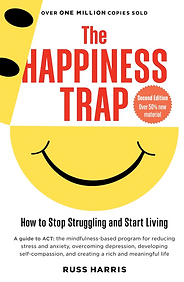
The Happiness Trap: How to Stop Struggling and Start Living
By: Russ Harris
Harris writes The Happiness Trap to highlight Acceptance and Commitment Therapy (ACT) in an approachable way. The author emphasizes how to make space for uncomfortable thoughts and feelings--rather than avoiding them--using methods like cognitive defusion (creating distance between ourselves and the thought/feeling), and metaphors. This book teaches readers that we can still live meaningful and value-based lives even when life and feelings get uncomfortable and messy. The book is written for anyone who is interested in learning more about the ACT therapy model--not just therapists or those in the mental health field.
Janelle De Guzman
Resident in Counseling
Therapist

Love’s Executioner and Other Tales of Psychotherapy
By Irvin Yalom
Irvin Yalom is well regarded in the mental health field for his expertise in existential psychotherapy, but also for his candidness and honesty about his feelings for clients, his view on human nature, and how he interprets the therapeutic process. For fellow therapists, reading Irvin Yalom’s words will feel relatable and validating and for clients, it will be informative and insightful. This book demonstrates how to deepen the treatment with clients by bringing the here and now moments between client and therapist into awareness and confronting the things both therapist and client might be afraid to say. Through 11 separate client interactions, Irvin Yalom is able to show how to adapt to the moment and rely on his own humanness to connect with the individual sitting across from him. This book is a fascinating look into a psychotherapy client’s unique life stories and how a therapist focused on subconscious motivations in his clients, as well as their unknown fear of living a meaningless life, can be the catalyst for deep change and growth. To anyone in therapy or interested in beginning the process, this book will give you a deep look on what to expect and how therapy can impact your overall wellbeing!
Ashton Barnes, NCC
Resident in Counseling
Therapist

Cribsheet
By Emily Oster
In a world where clickbait articles are commonplace, Oster breaks down what the research really says and how to deduce if a study is trustworthy. An economist by day, Oster covers the research on topics such as breastfeeding, daycare, sleep training, and language acquisition. This book is for all the parents/caregivers out there that enjoy having data to corroborate parenting decisions.
Jenna Ham, LPC, CSAC
Therapist

It's My Turn: How To Gain Freedom from a Manipulating and Self-Centered Parent
By: Tina Fuller
This book is perfect for adult children who have a parent with narcissistic tendencies or meets full criteria for Narcissistic Personality Disorder (NPD). Tina Fuller writes about her experience involving how she found out her mom has this diagnosis after years of surviving emotional manipulation and abuse. It is recognized that it is highly likely for someone with this diagnosis to not seek treatment and obtain a formal diagnosis due to the notion that they--the person with NPD--do not perceive their behaviors and habits to be problematic.
This book can be therapeutic for someone who continues to struggle with letting go of the feelings of sadness and anger towards their parent. Throughout this book, Tina goes above and beyond as she shares her experience with these emotions and how they morphed into peace and acceptance as she regained control of her life through a model she created known as P.A.C.E. (Protect, Accept, Change, Empower).
Cloey Bibbs, NCC, CCTS-I
Resident in Counseling
Therapist

Good Morning, Monster
Five Heroic Journesy to Emotional Recovery
By Catherin Gildiner
Catherine Gildiner, a therapist, reflects on five memorable patients she has worked with over the course of her career in this insightful, powerful, and deeply inspiring book. The stories recounted in these chapters come from individuals Gildiner calls ‘psychological heroes’ due to their profound emotional bravery and courage in facing their trauma head on, and their willingness to dip a toe into their past in order to move towards a secure, safe, and fulfilling future. Not only does this book provide therapists and mental health clinicians with valuable insight into how to sit with a client's pain, it shows us readers the inherent resilience that all human beings have. The impact of childhood trauma is devastating and, at times, unbearable, but Good Morning, Monster reminds us that we are not alone in our fight for healing, and a compassionate, consistent, and curious therapist can bare witness to your pain and show you that trust in someone else is possible. While some of the subject matter is tough to read, the overall content in this book is just as informational as it is impactful. Readers can expect to be changed from reading this book and will walk away with newfound empathy and compassion for their fellow human beings - I cannot recommend it enough!
Ashton Barnes, NCC
Resident in Counseling
Therapist

Attached: The New Science of Adult Attachment and How It Can Help You Find--And Keep--Love
By: Amir Levine, MD and Rachel S.F. Heller, M.A.
Dr. Levine and Rachel Heller walk through the differing attachment styles (anxious, avoidant, and secure) and how it affects the way we communicate and build relationships with others. The book has quizzes, assessments, and real-life examples for readers to relate to and interact with. This is a great book for those who want to understand their attachment styles better, where they come from, and those who wish to learn how to work with those attachment styles to develop healthier relationships with others.
Janelle De Guzman
Resident in Counseling
Therapist

Notes on Grief
By: Chimamanda Ngozi Adichie
“Grief is a cruel kind of education. You learn how ungentle mourning can be, how full of anger. You learn how glib condolences can feel. You learn how much grief is about language, the failure of language and the grasping for language. Why are my sides so sore and achy? It’s from crying, I’m told. I did not know that we cry with our muscles. The pain is not surprising, but its physicality is, my tongue unbearably bitter, as though I ate a loathed meal and forgot to clean my teeth, on my chest a heavy, awful weight, and inside my body a sensation of eternal dissolving. My heart—my actual physical heart, nothing figurative here—is running away from me, has become its own separate thing, beating too fast, its rhythms at odds with mine. This is an affliction not merely of the spirit but of the body. Flesh, muscles, organs are all compromised. No physical position is comfortable. For weeks, my stomach is in turmoil, tense and tight with foreboding, the ever-present certainty that somebody else will die, that more will be lost.”
Notes on Grief recounts Adichie’s devastating experience with the loss of her beloved father during the COVID-19 Pandemic. Over a video call from across the world, she learns her father has unexpectedly died. Adichie captures the raw reality of bereavement: physical pain, memories unearthed, the sometimes necessary task of turning from “pain to planning”. Her words offer us an opportunity for connection; if we’ve met Grief, the quoted text above will likely be familiar to us. This book tells a personal story as much as it offers an outline for mourning, reflection and wisdom that may guide a grieving heart to some relief. For anyone with fresh or lasting grief over the passing of a loved one, this beautifully written memoir may offer insight, or at the least, remind you that you are not alone in your experience.
Kellyn McRory, NCC, Resident in Counseling
Therapist

The Beginner's Guide to Dream Interpretation
By: Clarissa Pinkola Estés, Ph.D.
As a therapist who incorporates dream work in sessions, I highly recommend this audiobook for anyone curious about the meaning of their dreams. Estés offers an approachable, Jungian perspective that helps readers see dreams not as random events, but as meaningful messages from the unconscious.
What I appreciate most is how accessible she makes the process—offering tools to recognize symbols, patterns, and archetypes without relying on rigid “dream dictionaries.” It’s a practical, empowering resource for personal growth and therapy alike.
If you’ve ever wanted to explore the wisdom within your dreams, this is a wonderful place to start.
Sydney Villeneuve, LPC
Therapist
Quality Assurance Specialist

Book Review — The Anxious Generation: How the Great Rewiring of Childhood Is Causing an Epidemic of Mental Illness
By Jonathan Haidt
In The Anxious Generation, social psychologist Jonathan Haidt explores how smartphones and social media have contributed to higher rates of anxiety, depression, loneliness, and other mental health issues in children and adolescents. In particular, he talks about how technology is replacing free play, face-to-face connection, and real-world exploration with screens, comparison culture, and online validation, lowering resiliency, social skills, and self-esteem. He offers solutions such as limiting social media use, delaying technology access, and increasing unsupervised outdoor play and in-person friendships. This is a wonderful and informative book for therapists, teachers, youth, parents, and anyone interested to check out to see how technology has been affecting youth and how we can improve or reverse some of these mental health effects moving forward.
Janelle De Guzman
Resident in Counseling
Therapist

Raising a Secure Child
by Kent Hoffman, Glen Cooper and Bert Powell with Christine M. Benton
Raising a Secure Child offers a parenting perspective that aims to induce confidence in parents as they become adept, albeit imperfect, at meeting their child’s attachment needs.
This is one of those parenting books that feels less like a manual and more like guidance from a wise, supportive friend. Based on the Circle of Security model, it helps you understand what your child really needs from you emotionally—and how to show up for them in a way that builds trust and connection. This book doesn’t push perfection. The authors remind you over and over that being “good enough” is actually what helps your child feel safe and secure. There’s a lot of warmth and honesty in these pages, and it gently invites you to reflect on your own upbringing and how that shows up in your parenting today (or how it may show up later, if you aren’t yet a parent or caregiver). Whether you’re a parent, caregiver, or just someone who wants to understand parent-child relationships better, this book is a beautiful reminder that showing up as the parent who is “bigger, stronger, wiser and kind” really does make all the difference.
Kellyn McRory, LPC, NCC
Therapist

Rage Becomes Her: The Power of Women's Anger
By: Soraya Chemaly
Anger----the focus of this publication and the specific emotion I felt whilst reading it. The dual author and activist Soraya Chemaly discusses the obvious and subtle ways in which sexism and misogyny "drip" into every fabric of our society. She explores intersectionality surrounding this particular emotion--(i.e. how gender + sex, race + ethnicity, and cultural norms all impact the expression (or lack thereof!) of anger.) Then, she takes us through the devastating ways in which suppressing healthy anger takes a toll on us, both mentally and physically, and the impacts that has on us in society and as a society.
Angry yet? I hope so! So now what? The author posits that we channel this anger into action. We use it to demand equity and justice and utilize it as a catalyst for change. Our anger, after all, is the solution. Our anger is our power.
Julia Wellons, Resident in Counseling
Therapist

Come As You Are
By Emily Nagasoki
While the cover of this book generalizes its content to your overall sexual wellbeing, it’s really about female empowerment, female sexuality, self-acceptance, and the science behind the interconnectedness of our brain and bodies. It’s unfortunate that the concept of sexuality and feeling confident in your body with all of its parts has become taboo; people often are afraid to discuss challenges they are experiencing or even joyful moments, too. I have frequently heard a recurring theme of shame in women who have had the full spectrum of experiences regarding their sexuality, and many don’t have knowledge of how their nervous system and stress response impact their physiology. This book uses a blend of science and compassionate psychoeducation to assist readers in gaining insight and understanding into their instinctual stress responses and drives that can influence desire, confidence, and sexual and physical wellbeing. Emily Nagoski does an excellent job in destigmatizing awkwardness or shame in the dialogue surrounding sexual health and reminds readers that female sexuality - which can go hand in hand with self-love and self-acceptance - deserves to take up space in the mental health world and the societal landscape at large. Regardless of your sexual health, preferences, orientation, or levels of curiosity, this book offers a great amount of knowledge and education as well as open-ended reflections to guide you in expanding your self-awareness and confidence, which hopefully can lead to a restored and trusting nervous system and overall improved relationship with your body.

Maybe You Should Talk To Someone
A Therapist, Her Therapist, and Our Lives Revealed
By Lori Gottlieb
If you have ever been remotely curious about what your therapist experiences as both a professional sitting across from you, but also a human being with their own quirks and challenges, this book is absolutely for you. Maybe you should talk to someone is a terrific representation of what it’s like to go to therapy for one specific stressor or life event, but then realizing that life isn’t that simple and therapy is about so much more than a quick fix to a singular problem. Lori Gottlieb uses her own sense of humor as well as her unique fears to paint a realistic picture of the hardships and the triumphs of looking inward and doing self-reflection in your personal therapy sessions, while at the same time, holding space for other individuals going through their own ‘stuff’ in their therapy sessions. Being a therapist is a privilege as we get to walk alongside you throughout your special journey - and we know what it feels like to need that, too. Strongly recommend this book to therapists and those seeking therapy in equal measure!
Ashton Barnes, Resident in Counseling
Therapist

Listening to My Body
By: Gabi Garcia
Listening to My Body ,by Gabi Garcia is a short book to help therapists, counselors, parents, and/or teachers help kids learn how to connect with their bodies. Although this is a kid's book, the language and information can also be applied to individuals of any age, or any therapist beginning somatic work with clients. Garcia has moments of practice throughout the book: such as listening to hunger, taking calm breaths, noticing a fast heart beat, or feeling tense muscles. She uses accessible and empowering language to help readers befriend their bodies slowly and gently.
Janelle De Guzman
Resident in Counseling
Therapist

The 10 Best Anxiety Busters: Simple Strategies to Take Control of Your Worry
By: Dr. Margaret Wehrenberg, PsyD.
Dr. Wehrenberg writes a straightforward book with 10 specific and detailed skills to manage anxiety and calm the nervous system. She also explains how the brain and the body can play a role in anxiety. These skills include: diaphragmatic breathing; grounding techniques; understanding the amygdala (the brain’s threat center); containing our worry; moving our bodies; improving sleep hygiene; gently exposing ourselves to our fears, and having supportive people. These CBT and exposure-based skills are helpful for anyone and can help reduce anxiety, manage panic, and slow down or stop rumination and catastrophizing.
Janelle De Guzman
Resident in Counseling
Therapist

And How Does That Make You Feel?: Everything You Never Wanted To Know About Therapy
By: Joshua Fletcher
To all therapists and any person seeking therapy: read this now! What an absolutely exceptional and human look into a therapist’s mind as they sit across from four clients while simultaneously managing their inner dialogue to provide the best care possible. Joshua Fletcher, a psychotherapist based in the UK, seamlessly interweaves chapters with psychoeducation on many common mental health concerns into a larger narrative that includes content from sessions and his inner monologue showing his humanity as a therapist.
At the same time, he is also blending in his own experience with grief and loss as a way to support and care for clients without overstepping therapeutic boundaries. Therapists and clients in the UK will feel connected to Joshua’s personality and therapeutic style, and therapists and clients in the US will learn more about the training and nuances of therapy in a different setting.
If you are looking for validation and deep understanding of anxiety and relational trauma, education on helpful modalities for your therapy journey, or simply are curious about who is sitting across from you when you are at your most vulnerable, then this is the book for you. It has been a while since I laughed, cried, and felt empowered after reading a book that so accurately gets the personal and professional components to this beautiful job.
Ashton Barnes, NCC
Resident in Counseling
Therapist

The Grieving Brain
By: Mary-Frances O'Connor
In The Grieving Brain, neuroscientist and psychologist Mary-Frances O’Connor explains grief as a natural brain process. When someone we love dies, our brain must gradually learn and adapt to their physical absence. The pain, longing, and disbelief many people experience are not signs of weakness, they actually reflect the deep bonds we have formed.
The most powerful takeaway from this book is that grief is not something to “get over,” but something the brain slowly integrates over time. This understanding can be especially helpful in the early months of loss, when emotions feel overwhelming or confusing, and for anyone worried that their grief isn’t “normal.”
By grounding loss in science and compassion, The Grieving Brain offers reassurance, validation, and hope for those navigating bereavement. When I’ve shared sections of this book with grievers, they often feel that they can relate, which normalizes their grieving experience. From personal experience, this book can be especially helpful when read prior to a loss or several months into the grieving process, once the initial shock has eased and there is more emotional space to take in the science and insight it offers.
Maria DeBonis-Richards, MSED,CT
Resident in Counseling
Therapist
Certified in Thanatology: Death, Dying, Loss & Bereavement

Novice to Master
By Sōkō Morinaga
Novice to Master is a reminder that growth isn’t about having all the answers — it’s about learning to stay open even when we don’t. Through simple, honest stories, Zen master Sōkō Morinaga shows how real change starts when we’re willing to admit we don’t know everything, and that’s not a weakness — it’s where transformation begins.
The lessons in this book line up with the work we do in therapy: letting go of perfectionism, learning patience with ourselves, and building resilience through the messy parts of growth. It’s not about arriving at a final destination; it’s about staying present and curious along the way.
This is a great read for anyone who’s in the process of healing, changing, or simply trying to live with a little more kindness toward themselves.
Sydney Villeneuve, LPC
Therapist
Quality Assurance Specialist

How to Stop Feeling So Damn Depressed: The No BS Guide for Men
By: Jonas A. Horwitz, PhD
How to Stop Feeling So Damn Depressed delivers a direct approach to understanding and coping with depression, particularly for men. Dr. Horwitz explores externalizing depression (calling it “The Beast”) and how to cope with or “starve the beast” using tools like CBT; managing chemical/drug use; behavioral activation; sleep regulation; following a routine; movement, and many more stabilization tools to help manage depressive symptoms. The book is written in a casual tone and is helpful for therapists, men, or those that want to learn depression coping skills in general.
Janelle De Guzman
Resident in Counseling
Therapist

Sociopath: A Memoir
by: Patric Gagne, PhD
This book gives an incredible amount of insight into a diagnosis that is often deeply stigmatized and misunderstood in the mental health field. Sociopathy, Antisocial Personality disorder, and Psychopathy have typically been labels that are used interchangeably in popular culture, but all 3 have distinct presentations and symptomatology experienced by those who are or are not formally diagnosed. This book helps illustrate the differences between these labels through clinical research and information, but also lived experience.
Patric Gagne, a therapist and PhD holder, was formally diagnosed by a professional psychologist as a sociopath and in this memoir she documents her inner world and her journey understanding herself through honest disclosures and insights, and in snippets of her individual therapy sessions. Through her immense research and personal experiences, she provides nonjudgemental psychoeducation on sociopathy and the impact this diagnosis has had on her career, relationships, and self-understanding. She details how this diagnosis--while not a death sentence nor a walk in the park--has led her to assist many other individuals walking a similar path through her work, and how there is still so much advocacy and compassion that needs to be extended to individuals managing this diagnosis or these symptoms.
This is a wonderful read for those more curious about symptoms and experiences of sociopathy to lessen the stigma, for mental health professionals to expand their knowledge, and for individuals who might resonate more deeply with this diagnosis.
Ashton Barnes, NCC
Resident in Counseling
Therapist

I'm Dead, Now What?
Planner - Important Information about My Belongings, Business Affairs, and Wishes
By Peter Press
The title alone made me laugh: I’m Dead. Now What?: Important Information About My Belongings, Business Affairs, and Wishes. It’s direct, a little unexpected, and honestly, kind of perfect for a topic most of us would rather avoid. I spend a lot of time talking about the importance of planning ahead, and this book offers a simple way to get started.
I’m Dead. Now What? is really more of a workbook or organizer than a book you read from beginning to end. It includes tabbed sections for personal information, medical information, key contacts, finances, important documents, pets, and your wishes. If you're someone who loves a planner, checklist, or having everything in one place, you'll probably appreciate this book. More importantly, it takes what can feel like an overwhelming task and breaks it down into manageable pieces.
I filled mine out several years ago and recently went back to update it because, as we all know, life changes. That experience reminded me that end-of-life planning isn't necessarily a one-time project. Our relationships, responsibilities, and wishes can change, so it makes sense that our plans might need to change too.
I think this book can be helpful for anyone who wants to get organized, families navigating a terminal illness, or anyone who wants to make things easier for the people they love. Planning for death doesn't have to be morbid; having important information organized and your wishes documented can bring a sense of clarity and peace. What I appreciate most about this book is how practical it is. It helps turn the idea of end-of-life planning into something you can actually do, rather than something you keep putting off.

What Happened to You?
By: Dr. Bruce Perry and Oprah Winfrey
An insightful, informative, and exceptionally digestible look at how trauma impacts our neurobiology, our attachment, and how we relate to ourselves, others, and the world around us. This book, co-authored by none other than Oprah, seamlessly blends scientific concepts relating to brain structure and functioning with the social and personal impact that trauma--such as abuse, neglect, poverty, systemic oppression--has on us individually and collectively.
What is most noteworthy is that this reads like a conversation between two experts who simultaneously are teaching and learning from one another in a deeply non-pathologizing way. What happened to you shifts the narrative from our actions, behaviors, and reactions insinuating that there is something wrong with us to a foundation of understanding, compassion, empathy, and nurturing based on all that we have survived. Dr. Perry and Oprah share that so much of what humans do and how we behave are actions rooted in both protective and adaptive survival responses based on past traumatic experiences; essentially, we are all doing the very best we can despite what we have endured.
I strongly, strongly recommend this book to all clinicians in the field in order to further your understanding of the impacts of trauma and the importance of connection in healing. I also strongly recommend this book to every single person who has survived the seemingly unsurvivable--you are the heroes.
Ashton Barnes, NCC
Resident in Counseling
Therapist

Intuition and the Mystical Life
By Caroline Myss and Clarissa Pinkola Estés
The audiobook “Intuition and the Mystical Life” by Caroline Myss and Clarissa Pinkola Estés is a soul-stirring exploration of the unseen forces that guide us. Through profound wisdom and captivating storytelling, these two spiritual teachers illuminate how intuition can serve as a sacred compass in our daily lives. The audiobook feels like an intimate conversation, offering listeners a blend of ancient wisdom, psychological insight, and mystical truth. Myss and Estés encourage us to trust our inner voice and embrace life’s mysteries with courage and reverence. Their unique perspectives inspire deep reflection, making this audiobook a powerful guide for those seeking a more intuitive and spiritually connected life. A must-listen for anyone yearning to explore the magic of their inner world.
Sydney Villeneuve, LPC
Therapist
Quality Assurance Specialist

The Neuroscience of Self-Love
By: Alexis Fernandez-Preiksa
In The Neuroscience of Self-Love, Alexis Fernandez-Preiksa combines neuroscience, personal development, and practical tools to offer a compelling guide to building a healthier, more compassionate relationship with yourself. The author explains how the brain’s wiring, habits, and beliefs can keep us trapped in cycles of self-criticism — and more importantly, how we can rewire those patterns.
What sets this book apart is its accessibility. Complex concepts like neuroplasticity, the default mode network, and limbic system responses are broken down in a digestible and often humorous way. The tone is both empowering and down-to-earth, making it easy to stay engaged even while exploring deep emotional terrain.
Through journal prompts, thought experiments, and guided reflections, The Neuroscience of Self-Love invites readers to become active participants in their healing. It’s not just about understanding how the brain works — it’s about using that understanding to cultivate radical self-kindness and intentional mental habits.
Syndey Villeneuve, LPC
Therapist
Quality Assurance Specialist

Inner Work
By Robert A. Johnson
Robert A. Johnson’s Inner Work offers a practical guide to self-discovery through dream analysis and active imagination, grounded in Jungian psychology. With clear, step-by-step instructions, Johnson helps readers explore their unconscious mind, uncover hidden emotions, and foster personal growth.
This book is especially valuable for those seeking emotional regulation and deeper self-awareness. Therapists may find it useful for supporting clients in processing emotions, managing stress, and improving sleep by addressing unresolved feelings.
Accessible and insightful, Inner Work is a recommended read for both professionals and anyone on a personal growth journey.
Sydney Villeneuve, LPC
Therapist
Quality Assurance Specialist

Introduction to Internal Family Systems
By: Richard Schwartz
Introduction to Internal Family Systems is a readable, engaging, and informative introduction to what many colloquially know as “Parts Work." Richard Schwartz shares how he came to understand the human psyche in a different and more hopeful framework. The reader will gain insight into the foundation of why this methodology works and how Schwartz came to discover it. He offers a glimpse into how Internal Family Systems can be used through case studies, however, it is a perfect primer to his next book, No Bad Parts, which dives even deeper into the nitty gritty of the work. If you are a therapist, counselor, or a client who is interested in learning how to tend to yourself in a kind and deep way, this book is a must read.
Matthew Dean
Resident in Counseling
Therapist

Find Me There
by Sara Rian
After a significant loss, many people search for something that will help them understand what they are experiencing. However, grief can also make it difficult to concentrate or even finish a chapter of a book. After a loss, so much energy goes toward trying to understand and adjust to a new reality, which can make reading feel much harder than it once did. Because of this, traditional grief books can sometimes feel overwhelming when someone is already carrying so much.
This is one of the reasons I appreciated Sara Rian’s Find Me There. Through short, thoughtful poems, Rian creates space for the many emotions that come with grief, including love, pain, longing, and memories that can be difficult to put into words. For someone who may not have the energy or focus for a traditional grief book, this collection offers a gentle way to connect with grief in small moments. Rather than explaining grief, Rian offers something many grieving people need: the feeling of being understood. One poem that has stayed with me challenges a phrase many grieving people hear: “They wouldn’t want to see you cry.” Rian gently reminds readers that grief is a natural expression of love. Our tears reflect the depth of our love, not a failure to heal.
Reading this collection reminded me that grief is both universal and deeply personal. Some poems made my throat tighten, brought tears to my eyes, or gave me chills. Others did not resonate with me in the same way. That experience reminded me of something I often share with my clients: there is no single “right” way to grieve, and not every story or resource will speak to every person. Sometimes the greatest comfort is not finding answers, but finding words that reflect our own experience. I appreciate that Find Me There does not try to fix grief or tell readers how they should grieve. Instead, it offers companionship, reminding readers that their grief is valid, their love endures, and they are not alone.

The Making of a Therapist
By: Louis Cozolino
Being a therapist is an incredible gift--having the opportunity to walk alongside other human beings who are navigating their unique life experiences, and sit with them in their emotions is something none of us in this profession take for granted. We go to school to understand the different approaches to therapy and we receive training to ensure we have the right tools. But sometimes, we need just a little more guidance on how to move through the inner experiences that come with holding space for other humans. This is often when we reach for narratives and words of wisdom from those clinicians that came before us.
Louis Cozolino shares in this book practical tools and strategies for deepening the treatment with our amazing clients but also reflective questions and insights on how to deepen the relationship with our own sense of self in service of our clients. When we, as therapists, are able to look inward and understand our instincts, reactions, and responses to the world, we are better able to be attuned to our clients' needs. The Making of a Therapist offers validation, understanding, and support for those of us lucky enough to be in this profession, as well as tangible takeaways that will assist clinicians to step out of their comfort zone in order to enhance the therapeutic relationship.
Ashton Barnes, NCC
Resident in Counseling
Therapist

All the Way to the River: Love, Loss, and Liberation
By: Elizabeth Gilbert
Elizabeth Gilbert of Eat, Pray, Love fame takes an unflinching and at times astounding look at the ecstasy, pain, and freedom she finds through her relationship with her best friend, Rayya. Part memoir, part self-help, this book uses story-telling, anecdotes, poetry, and small drawings to bring the reader into Gilbert’s life and the difficult lessons she learned as she and Rayya fell in love, became a couple, and then navigated life together in the 18 months after Rayya’s terminal cancer diagnosis.
There is a lot to appreciate about Gilbert’s book, including the explanations and examples of codependency and addiction that access their realities in ways we might not have seen or understood before. But there are areas of Gilbert’s experience that can at times sound privileged, or at least slightly naive, and some depictions of drug use might be challenging or even slightly triggering for a reader to engage with.
If you’re curious about substance use/addiction, love and sex addiction, codependency, and 12-step programs, this book will give you a unique and honest glimpse into those worlds. Just be aware of the potential for some of that information to challenge you-- which seems entirely Gilbert’s point.
Shanon Deyerle
Resident in Counseling
Therapist

Perfectly Imperfect: Compassionate Strategies to Cultivate a Positive Body Image
by: Amy Harman, LMFT, CEDS
Amy Harman’s Perfectly Imperfect is for those who struggle with body image in today’s world. The book takes a compassionate approach throughout, and she uses evidence-informed strategies, affirmations, exercises, ideas, and prompts to help clients approach body image with curiosity, empathy, and acceptance. Harman doesn’t try to get readers to fix their bodies, but rather cultivate compassion, experience freedom from standards, and embrace imperfection. She enables readers to reconnect with their bodies and loosen the grip of comparison and self-criticism.
Janelle De Guzman
Resident in Counseling
Therapist

What My Bones Know is a heavy but profoundly insightful memoir on Stephanie Foo’s experience enduring significant childhood trauma that led to a diagnosis of Complex PTSD, and how relational healing in the form of individual psychotherapy, mindful grounding through restorative yoga, and healthy and stable interpersonal relationships helped her heal and move through life finding self-love and acceptance. Trauma - whether a Big T (think one singular event/events that had intense impacts like a car accident or natural disaster), Little T (chronic stressors like bullying, financial strain, etc) or complex trauma (chronic and prolonged trauma like abuse or neglect) impacts the way we think, feel, and move through the world and our bodies hold onto trauma that we have experienced throughout our lifetime, which can additionally lead to chronic physical health conditions. Stephanie describes her experiences in a direct way, and reflects on all she has endured with humor, sadness, but most importantly - hope. Hope for a future where complex PTSD is understood and treatment is more readily available for those who need it. Hope for more empathy and understanding for those who have experienced childhood trauma, especially for those in the BIPOC community… and hope that relational therapy will be key in helping so many other people who also have a similar diagnosis and background. Strongly recommend reading this in chunks rather than all at once, and stretching in between chapters to remind yourself to be attuned to what your body needs!

The Boy Who Was Raised As a Dog
By Bruce Perry, M.D., Ph.D., with Maia Szlavitz
This book is an eye opening look into the abhorrent actions of humans, the immeasurable trauma children experience due to abuse and neglect, a psychiatrist’s knowledge, and the impact of love and care on recovery from childhood trauma. Dr. Perry utilizes his vast knowledge of psychology and behavior to assist young children in navigating the impacts of their traumatic experiences, and demonstrates both clinically and scientifically what is occurring inside of us when we experience trauma. He offers an incredible amount of insight on how trauma and consistent exposure to intense distress re-shapes and re-wires our brain in such a way that the trauma can serve as a framework for how these children view safety in all future relationships and experiences. I cannot recommend this book enough for clinicians - who can benefit both from the insight and interventions that Dr. Perry describes in order to operate under a trauma informed lens - but also to individuals curious about the impact of trauma on children and the astounding resilience and courage they summon in order to heal. 10/10 read… one that will sit with you for the rest of your life!
Ashton Barnes, NCC
Therapist

How to Relax
by Thich Nhat Hanh
"A simple and essential mindfulness guide" are the first words that come to mind in describing this book. If you're like me, there's constant chatter inside your head and you may struggle with quieting your mind. It can feel impossible. This is why I personally love this book, and think you will too. It's short, easy to understand, and small so you can keep it with you in your bag and refer to it when you need it. It's filled with snippets of wisdom, delightful quotes, and super simple exercises to help you just be present in this moment. Thich Nhat Hanh is a renowned Buddhist monk, poet, teacher, and peace activist who offers us all a unique gift through his writing---how to achieve peace. He writes in a way that can help us all (novices included!) understand the purpose and benefits of relaxation + mindfulness, and how it can literally change your brain and your life.
Julia Wellons, NCC, CCTSI
Therapist

Riley the Rabbit Learns About Death
By Ashley Hall
As a grief counselor who supports children experiencing the death of a loved one, I am always looking for books that provide honest, developmentally appropriate conversations about grief. Riley the Rabbit Learns About Death does an excellent job of introducing children to the realities of death in a gentle, compassionate, and understandable way.
One of the strengths of this book is its use of clear and concrete language. Riley's mother explains that Uncle Ramsey "died" rather than using euphemisms such as "passed away," "went to sleep," or "we lost him." This is especially important for children, who often interpret language literally and can become confused by indirect explanations about death.
While this book is written for children, I believe adults can benefit from it as well. Children's books about death often model healthy ways to talk about grief, answer difficult questions, and support emotional expression. For parents, caregivers, educators, and helping professionals, this book serves as a valuable example of how to have honest conversations about loss.
The book also includes several helpful resources at the end, including a glossary that explains terms such as funeral, casket/coffin, and dead. There are discussion questions for parents and caregivers, suggested activities, and a contact page where families can list important sources of support such as school counselors, clergy, grief counselors, and trusted adults.
My one minor critique involves a statement from Riley's mother that "Uncle Ramsey would want you to have fun and be happy." While this is a common sentiment and likely intended to be comforting, some children and adults may feel pressure or guilt if they are not feeling happy or ready to have fun. Grief is highly individual, and it is important for people to know that sadness, anger, confusion, and other emotions are also normal and acceptable responses to loss.
Overall, Riley the Rabbit Learns About Death is a thoughtful and practical resource for families navigating grief. I would recommend it to parents, caregivers, educators, and clinicians who are supporting bereaved children. At Therapeutic Counseling and Consulting, I work with adults as well as children ages 7 and up who are experiencing death-related grief, and I can see this book being a valuable tool for helping start meaningful conversations about loss, remembrance, and healing.
Maria DeBonis-Richards, MSED, CT
Resident In Counseling
Certified in Thanatology: Death, Dying, Loss and Bereavement

Living With Your Body and Other Things You Hate: How to Let Go of Your Struggle with Body Image Using Acceptance and Commitment Therapy
By: Emily Sandoz, PhD and Troy DuFrene
Sandoz and DuFrene present a compassionate guide for body image and shameful thoughts through their book, Living With Your Body and Other Things You Hate. They use an Acceptance and Commitment Therapy (ACT) approach to help readers allow those thoughts to exist, make peace with the discomfort of those thoughts, and continue living without letting them take over their lives. In this book, they teach those who struggle with body image to connect with self-compassion, personal values, and passions to help them realize that they don’t have to “fix” these thoughts; they can still live even while these thoughts exist.
Janelle De Guzman
Resident in Counseling
Therapist

The Rabbit Listened
By: Cori Doerrfeld
The Rabbit Listened by Cori Doerrfeld is a simple but meaningful book about grief, emotions, and support. While it is often seen as a children’s book, its message is valuable for people of all ages. The story begins with a child building a block tower, which suddenly gets knocked down. The child feels upset and different animals come along with ideas about what to do like yelling, fixing the problem, blaming others, or trying to distract. These responses may sound familiar, as they reflect how people often try to handle difficult emotions. However, none of these approaches truly help the child feel understood.
Then the rabbit arrives. Instead of giving advice or trying to fix anything, the rabbit simply sits with the child in silence. In that quiet space, the child begins to share their feelings. The message is clear: sometimes the most helpful thing we can do is be present and listen. I have read this book to children ages 7–15 in grief groups and they consistently connect with the story. It creates a safe and gentle way to talk about big emotions. I would also recommend this book to adults, especially those who may struggle to find the kind of support they need and deserve.
This book connects with me both personally and professionally. Many people know that rabbits are my favorite animal and I have two of my own at home. As a certified thanatologist and counseling resident, I also understand how important it is to make space, be present, and listen without trying to “fix” things. This book reflects those values and reminds me of the kind of support I hope to provide. If you are interested in grief counseling or would like support, you can reach out to Therapeutic Counseling to set up an appointment.
Maria DeBonis-Richards, MSED, CT
Resident in Counseling
Therapist

Hold Me Tight: Seven Conversations for a Lifetime of Love
By: Dr. Sue Johnson
Every human longs to be attached to other humans. We are born into the world calling for someone to care for us. These longings change in form as we grow, but the root desire remains. When these desires aren’t met, we protest, fight, and shut down. For couples and therapists alike, Hold Me Tight is an incredible resource for anyone curious about how to improve emotional intimacy in relationships by helping the reader take a deep dive into what is truly going on in the heart. Dr. Sue Johnson, creator of Emotion Focused Therapy, provides a roadmap for using her evidenced-based theory. With both humor and sensitivity, Dr. Johnson gives practical conversations, helpful exercises, and deep insight that help couples go deeper into their feelings and stories. The result is tenderness, understanding, and more secure attachment with self and others. Whether you feel like you are at an impasse with your partner or you would just like to tune things up, Hold Me Tight is an excellent read.
Resident in Counseling
Therapist

Hypnobirthing: Practical Ways To Make Your Birth Better
By: Siobhan Miller
The aim of this book is to build confidence and calm in birthing people, as well as their partners, regardless of their preferred method of delivery. Siobhan Miller demystifies the concept of hypnobirthing and introduces readers to the main tenets of the philosophy, which center on reducing fear while offering clear information about the physiological process of labor and birth. Her writing is approachable and reassuring, making the ideas feel practical, rather than overwhelming.
This book offers compassionate support to birthing families without judgment around birth choices or outcomes. Miller encourages readers to feel informed and empowered, regardless of whether they plan an unmedicated birth, epidural, induction, or cesarean delivery. Another strength of the book is its focus on preparation. Miller provides tangible guidance for preparing both the mind and the birth environment for labor, while also offering tools to remain calm, grounded, and intentional throughout the process. Breathing techniques, relaxation strategies, and mindset shifts are presented in a way that feels accessible and realistic.
Overall, Hypnobirthing: Practical Ways to Make Your Birth Better is an encouraging and practical resource for anyone preparing for birth. It combines useful information with emotional support, helping readers approach labor with greater confidence and a sense of calm.
Kellyn McRory Breitenbach, LPC, NCC
Therapist

Redeeming Heartache: How Past Suffering Reveals Our True Calling
By: Dr. Dan B. Allender and Cathy Loerzel, MA
As a therapist who often works with clients exploring the intersection of trauma, identity, and relationships, Redeeming Heartache offers a profoundly resonant framework for understanding how our early relational wounds shape us—and how they can be transformed into meaningful purpose when tended to with honesty and care.
In this book, Dr. Dan Allender and Cathy Loerzel, MA—cofounders of The Allender Center—explore three core categories of woundedness: the orphan, the stranger, and the widow. These archetypes aren’t pathologizing; instead, they are deeply human, accessible ways of naming the pain so many people carry silently into adulthood. Each one represents a response to specific relational harm: abandonment, betrayal, and powerlessness. Through the lens of these identities, the authors invite readers into a compassionate journey of naming, engaging, and ultimately redeeming their stories of suffering.
What I found especially meaningful in this work is the integration of trauma-informed insight with Christian spirituality. This isn’t a self-help book that rushes you to healing; it’s an invitation to slow down, reflect, and recognize that God meets us within our pain—not outside of it. For clients or readers who come from a faith background but feel overwhelmed or disconnected by their story, this book offers both theological grounding and emotional safety.
Sydney Villeneuve, LPC
Therapist
Quality Assurance Specialist

Not Sure Who Needs to Hear This, But…
By Willie Green from We The Urban
In “Not Sure Who Needs to Hear This, But…” from We The Urban, Willie Greene delivers a powerful and thought-provoking collection of affirmations and reflections that resonate deeply with anyone navigating the complexities of modern life. This book serves as a reminder that we are not alone in our struggles and that vulnerability can be a source of strength. The authors blend personal anecdotes with universal truths, making it accessible and relatable for a diverse audience. Each chapter offers a refreshing perspective on topics such as self-love, mental health, and resilience, encouraging readers to embrace their authentic selves. The straightforward yet poignant writing style invites readers to reflect on their own experiences and fosters a sense of community.
What sets this book apart is its emphasis on actionable advice. The affirmations encourage readers to take proactive steps towards healing and self-acceptance, making it an invaluable resource for those seeking guidance in their mental health journey.
Sydney Villeneuve, LPC
Therapist
Quality Assurance Specialist

Jancee Dunn is vulnerable, honest, and hilarious in this part self-help part memoir. Dunn is candid about her own struggles with her marriage after having her daughter and details her and her husband’s journey to improving their relationship. This book includes realistic, real-world advice from respected therapists and even an FBI hostage negotiator. The advice and techniques are applicable for couples struggling to find the correct balance of household duties, parenting duties, and time for themselves.
Jenna Ham, LPC, CSAC
Therapist

The Highly Sensitive Person
By: Elaine N Aron
Aron really does a great job honoring our sensitivity from a strength-based perspective! This book allows you to have a hopeful understanding of why you feel things more deeply, and why you might respond to others and your environment more reactively, yet intuitively! This book serves as an impactful “Aha!” moment and also as a toolbox for how to navigate life as a Highly Sensitive Person (HSP). I recommended this book for anyone battling negative beliefs of themselves and their sensitivity to this world—it’s time you reframe the way you see yourself in how you stay attuned and intuitively connected to this world!
Sydney Villeneuve, LPC
Therapist

The Wild Edge of Sorrow: Rituals of Renewal and the Sacred Work of Grief
By: Francis Weller
In the opening chapter of this book, Francis says, “Grief is not a problem to be solved, not a condition to be medicated, but a deep encounter with an essential experience of being human”. This book is all about engaging with our humanity in a raw and beautiful way. He goes on to point out that in our western world, we are obsessed with finding ways to numb ourselves. Yet, grief demands to be felt. In this profoundly deep and kind book, Fracis provides a lens on grief that is ultimately extremely hopeful. Not because he tells you ways to dodge your pain, rather he invites you to consider what moving through your pain may look like. When our eyes are open, grief, or unattended sorrows, can be seen all around us. Pulling from eastern traditions that fit within our current context, Francis gives us an imagination for rituals and practices that will heal our bodies and gives us a sense of connectedness with our community and world - all by engaging with rather than escaping grief. I recommend reading this book with a soft blanket and a cup of tea!
Matthew Dean
Resident in Counseling
Therapist

The Inside Scoop on Eating Disorder Recovery
By: Colleen Reichmann and Jennifer Rollin
Reichmann and Rollin are two mental health professionals that give an “inside scoop” about disordered eating recovery and provide personal examples on how they navigated their journey. The book is filled with casual humor; relatability; exercises; prompts, and other evidence-backed tools to try. The authors explore dieting, eating disorders, definitions, and navigating emotions, body image, and trauma. This book provides a personal, therapeutic, professional, and compassionate approach to those in recovery and working towards healing.
Janelle De Guzman
Resident in Counseling
Therapist

Adult Children of Emotionally Immature Parents: How to Heal from Distant, Rejecting, or Self-Involved Parents
by Lindsay C. Gibson, PsyD
The first book in a series of 3 (woo we love a collection moment!). Having a parent(s) who may be physically present but not emotionally available can be extremely confusing and painful. Clinical psychologist + author Dr. Gibson draws a distinct connection: between feelings of anger, abandonment, anxiety, emptiness, + loneliness in adulthood to the experience of having unmet needs in childhood. She focuses on unmet needs in terms of parents who were either emotionally unavailable, emotionally immature, or a combo of the two. She discusses how these early life experiences leave invisible wounds that continue causing emotional pain and destruction within relationships. What can we do? Dr. Gibson describes tangible, meaningful ways in which you can free yourself from the pain, confusion, and disappointment that comes from these types of relationships.
Julia Wellons, Resident in Counseling
Therapist

Notes from Your Therapist
By Allyson Dinneen
This book is so enjoyable and useful in a variety of ways. In its most simplest form it’s aesthetically pleasing and a great ‘coffee table book’, but it really is so much more than that! This book is a conversations starter with a hook for depth and vulnerable conversations. I enjoy using this book in my therapeutic work with clients when they come to session feeling unsure what they want to discuss that day. This book is relatable across all human conditions and is filled of prompts that lead clients into exploring their own personal experiences in life. It is also a book that clients have then later bought after sessions to utilize for meditative self-reflection, and even for journal prompting. Dinneen created something truly insightful, inspirational, valuable, and relatable that I would recommend to all walks of life.
Sydney Villeneuve, LPC
Therapist

Sometimes Therapy is Awkward
By Nicole Arzt
This is a book I recommend for those early on in their career of being a therapist whether they are in the beginning of stepping into the mental health field, in graduate school, or completing their residency for licensure. I believe it could also be a great way to begin to explore the unknown of the therapy room for those who are curious to know what it is like as a first-time “client”. It reminds us that, well, therapy is awkward. It’s a read written from a stance of somewhere between humility and mastery of the craft. It’s a necessary reminder of what not to expect, what to hope for, and what will likely occur from both chairs in the therapy room.
Sydney Horton, LPC
Therapist

Neurobiologically Informed Trauma Therapy with Children and Adolescents: Understanding Mechanisms of Change
By Linda Chapman
This is a book I would recommend for anyone curious about the intersections of neurobiological development and the impacts of trauma. This book provides an in-depth understanding of the way in which our brains are hardwired while simultaneously providing tangible routes of change. Its evidence based information sparks hope for all in a space of healing—parents, loved ones, clinicians, and those resiliently coping through life since childhood.
Sydney Horton, LPC
Therapist

Atomic Habits
By James Clear
This one is an easily digestible book for all who come across it. This book can invoke a multitude of feelings if you are someone who wants sustainable change in your life. This book contains straight forward information, step by step examples, and loads of research to help the reader understand and make goals for lasting change. This book helps readers understand and come to know the 4 laws for change, (1) Make it Obvious, (2) Make it Attractive, (3) Make it Easy, and (4) Make it Satisfying.
Cassidy Van De Graaf, LPC
Therapist

Wherever You Go, There You Are
By Jon Kabat-Zinn
This one forces you to sit with yourself and reflect on the present moment. This one holds a lot of valuable information and if you’re ready to dive deeper into “being” instead of “doing,” this one is a great place to start. It is an easy read with many examples and challenges that will make you want to practice the art of mindfulness more in your daily life.
Cassidy Van De Graaf, LPC
Therapist

What Am I Thinking? Having a Baby After Postpartum Depression
By Karen Kleiman
Karen Kleiman, MSW, has written multiple pronounced books focusing on perinatal mood disorders. In What Am I Thinking? Having a Baby After Postpartum Depression Karen highlights the specific fears women who have lived through perinatal mood disorders may experience when thinking about having another child. This book combines real world stories from women and workbook style reflections to assist the reader in creating a hands-on plan to prepare for pregnancy and having another child.
Jenna Ham, LPC, CSAC
Therapist

I'm Glad My Mom Died
By Jeannette McCurdy
This one is for all the young adults who grew up knowing and loving the nickelodeon show icarly. Jennette McCurdy (aka Sam on icarly) reveals so much of herself in this read including mental illness, complicated familial relationships, eating disorders, and much more. This book can be greatly appreciated for its raw honesty and openness on topics that may sometimes still appear as “taboo” to talk about.
Cassidy Van De Graaf, LPC
Therapist

The Wounded Woman
By Linda Schierse Leonard
This is an honorable mention for all women, survivors of generational trauma, that have been wounded within the relationships that are most innately yearned for deep within the bones of the feminine psyche. In this book you’ll be taken to explore the inner wounds of women who have been impacted by the wavering, conditional, dismissive, absent presence of men and the masculine roles in your waking lives.
Sydney Horton, LPC
Therapist

Whole Brain Child
By Daniel J. Siegel, M.D. and Tina Payne Bryson, Ph.D.
A must read for any parent or caregiver looking to understand the brain structure and development of their young child. The authors provide reader-friendly, real world examples to help manage a multitude of challenging parenting situations from toddler tantrums to grade school fears. Twelve key strategies are outlined with easy to understand resources to review with children to help teach them impactful skills such as self-regulation, engagement, and mindfulness.
Jenna Ham, LPC, CSAC
Therapist

Say What You Mean
By Oren Jay Sofer
This one discusses at length the importance of Non-Violent Communication. This book is so user-friendly (and client / therapist friendly) with its rich examples that you may find a multitude of answers on how to handle certain communication difficulties in your life. This book will leave you wondering and preparing for your next effective interpersonal encounter.
Cassidy Van De Graaf, LPC
Therapist

Set Boundaries, Find Peace
By Nedra Glover Tawwab
This one is an all-time favorite, because who doesn’t need boundaries in their life? This book breaks down boundaries in the most simplistic way and helps guide you through what this may look like in your own life and relationships. With a topic this important, it is vital to take this book slowly as you consider how to apply each of the tips/tricks/advice/information given.
Cassidy Van De Graaf, LPC
Therapist

The Body Keeps the Score
By Bessel Van Der Kolk, M.D.
She’s dense with rich new information ready to turn “ah-ha” moments
into lasting insight. If you’re looking to learn more about not just the psychological impacts of trauma but the way in which it impacts your body down to a cellular level, this is the book for you. A book filled with information supported by interdisciplinary quantitative and qualitative research that will bring you back to your body with a deeper understanding of how resilient you really are.
Sydney Horton, LPC
Therapist

101 Essays That Will Change the Way You Think
Brianna Wiest
I highly recommend "101 Essays That Will Change the Way You Think" by Brianna Wiest. 101 sounds like a big number, but each essay is short and sweet. I firmly believe that this book encourages self-exploration and is filled with words that people need to hear who are struggling with where they are at in life. A lot of people my age talk a lot about feeling lost in life and confused. Brianna Wiest is a clever writer, and there have been many moments when I read this book and felt shocked at the new perspectives I had developed. 10/10 would highly recommend!!
Cloey Bibbs, B.S.
Clinical Mental Health Intern