

September Is Suicide Prevention Month: Let’s Start the Conversation
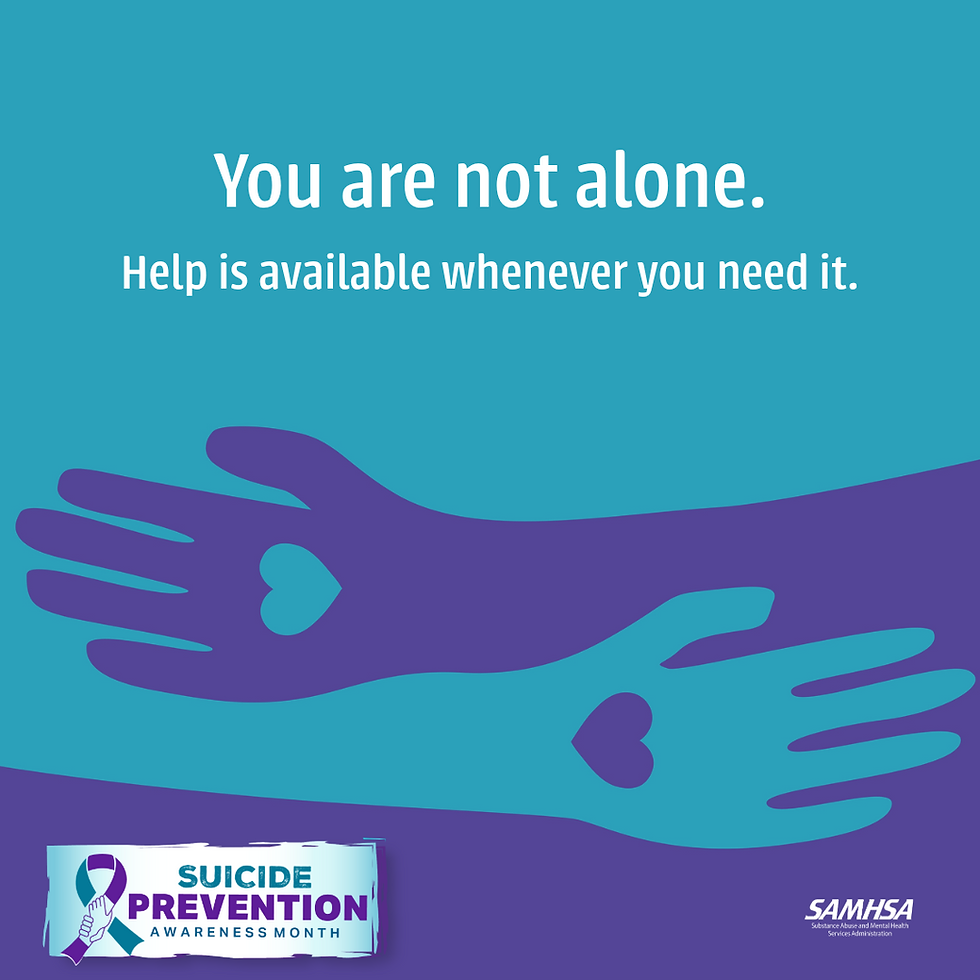
Image from:Suicide Prevention Awareness Month | SAMHSA
September is National Suicide Prevention Month. It is a time to raise awareness, learn how to support people who may be struggling and remind one another that suicide prevention is something we can all be part of.
Suicide can be an uncomfortable subject. We may worry about saying the wrong thing or making things worse. But avoiding the conversation doesn't make the problem disappear. Sometimes, the most important thing we can do is ask, “Are you okay?” and listen to the answer.
How Do You Talk to Someone About Suicide?
You don't need to have the perfect words or be a mental health professional to reach out. Start with what you've noticed and let the person know you care.
You might say:
“I've noticed you've seemed like you're having a really hard time lately. I'm worried about you. Can we talk?”
“You've been on my mind. How are you really doing?”
“I'm here if you want to talk.”
If you're concerned that someone may be thinking about suicide, it is okay to ask directly:
“Are you thinking about suicide?”
Asking directly does not put the idea into someone's head. It can give a person who is struggling an opportunity to talk about what they're experiencing. Focus on listening rather than fixing. Avoid judgment or minimizing what they're feeling. You don't have to solve their pain. Let them know they don't have to face it alone.
What If They Say Yes?
Take them seriously and give them your full attention. You don't need to have all the answers.
You can say:
“I'm really glad you told me.”
“I'm here with you.”
“You don't have to go through this alone.”
“Let's figure out what support you need.”
Help connect the person with professional or crisis support. If there is an immediate concern for their safety, stay with them and get help. Call or text 988 to reach the 988 Suicide & Crisis Lifeline, which provides free and confidential support 24/7. If someone is in immediate danger, call 911.
What If You're Not Sure Something Is Wrong?
You don't have to wait until you're certain before checking in. Maybe a friend has withdrawn from others. A teenager may not seem like themselves. A family member may be talking about hopelessness or feeling like a burden. You may also notice a significant change after someone experiences a difficult life event. Trust your instincts and reach out.
A simple text can be enough:
“Hey, you've been on my mind. How are you doing?”
Invite someone for coffee, make the phone call, or simply sit with them. You don't have to be an expert to show someone that you care.
Supporting Those Who Are Grieving
Suicide also deeply affects the people left behind. Grief after a suicide loss may include sadness, anger, guilt, confusion, and unanswered questions. There is no single way to grieve, and support may be needed long after the initial loss.
For those in Virginia, Full Circle Grief Center offers a Suicide Intervention and Postvention Resource Hub for people experiencing suicidal thoughts, those supporting someone who is struggling, and individuals and families grieving a suicide loss. Full Circle also offers an eight-week Suicide Loss Group for adults.
An Opportunity to Walk Together
Sometimes supporting suicide prevention means simply showing up. On Saturday, October 31, 2026, the American Foundation for Suicide Prevention will host the Richmond Virginia Out of the Darkness Walk at Byrd Park. The walk brings people together to support suicide prevention, remember those who have died and connect with others affected by suicide.
Let's Make It Easier to Talk About Suicide
Talking about suicide may feel uncomfortable, but that shouldn't stop us from reaching out. Ask how someone is really doing. Listen without judgment, take them seriously and help them find support when they need it. You don't need to have all the answers. Sometimes, simply saying “You matter to me. I'm here. You don't have to go through this alone.” can make a difference.
References
American Foundation for Suicide Prevention. (n.d.). National suicide prevention month. https://afsp.org/national-suicide-prevention-month/
American Foundation for Suicide Prevention. (n.d.). What to do when someone is at risk. https://afsp.org/what-to-do-when-someone-is-at-risk/
American Foundation for Suicide Prevention. (n.d.). If someone tells you they're thinking about suicide: A #RealConvo guide. https://talkawaythedark.afsp.org/thinkingaboutsuicide/
American Foundation for Suicide Prevention. (2026). Walk with us to fight suicide in Virginia. https://afsp.org/chapter/virginia-walks
Full Circle Grief Center. (n.d.). Supporting someone experiencing thoughts of suicide: A practical manual. https://fullcirclegc.org/suicide-resources/
Full Circle Grief Center. (n.d.). Suicide intervention and postvention resource hub. https://fullcirclegc.org/suicide-resources/
Substance Abuse and Mental Health Services Administration. (2026, September 1). Suicide prevention awareness month: Renewing our commitment to prevention, recovery, and hope. https://www.samhsa.gov/blog/suicide-prevention-awareness-month-renewing-our-commitment-prevention-recovery-hope

Comments