

Softening the Edges of Perfectionism: When 'Doing Your Best' Never Feels Like Enough


Have you ever felt like no matter how much you accomplish or how hard you work, it still doesn’t feel like enough and it still feels like you’re falling short? Do you find yourself replaying scenarios in your head over and over again, wondering how you could have done things a little bit better? Do you ever feel like you have to do it all and can’t make mistakes or else something terrible will happen? If any of this resonates with you, you’re not alone, and you’re not broken. You might just be experiencing perfectionism.
What is Perfectionism?
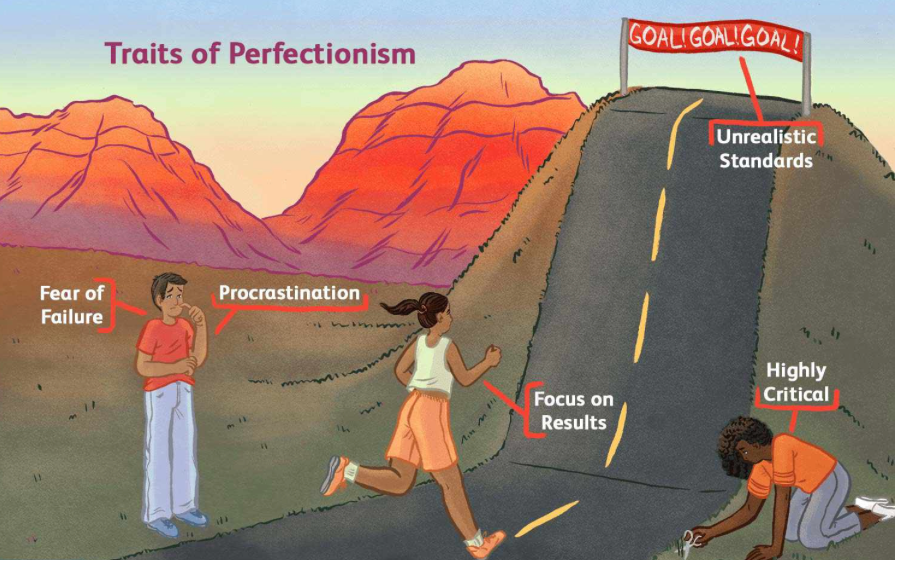
Perfectionism can sometimes be misunderstood as being a hard worker or just having high standards. However, it can be heavier than that. According to motivational speaker Brené Brown, perfectionism is: "a self-destructive and addictive belief system that fuels this primary thought: if I look perfect, and do everything perfectly, I can avoid or minimize the painful feelings of shame, judgment, and blame.” Moreover, American writer Maria Shriver states that “perfectionism doesn't make you feel perfect; it makes you feel inadequate.”
Perfectionism can feel like constant pressure to get everything right, make no mistakes, and constantly perform to prove your worth. Although it can sometimes motivate achievement, it can also be tied to anxiety; burnout; shame; self-criticism, and low self-esteem.
To work with rather than against perfectionism, it helps to understand where it comes from and then work with it using compassion rather than criticism.
Root Causes of Perfectionism

Perfectionism isn’t random. It’s built and developed over time as a response to societal/parental expectations, early childhood experiences, internal beliefs, and exposure to high-achieving environments. Below are a few examples and explanations about the roots of perfectionism:
Early Messages/Expectations About Worth and Achievement
A lot of people who struggle with perfectionism grew up in environments or with caregivers where love, praise, and attention were tied to high achievements, high grades, and high performance. This isn’t always explicit, forced, or overt. Sometimes, these expectations happen subtly through labels, like being smart; responsible; reliable; mature; independent; easy; strong; disciplined; put together; organized; good looking, or anything else you may have heard.
Over time, we become conditioned to link achievement and these labels to our identity. It can sound like, “I am valued when I do things perfectly”, “If I want to be loved/praised, I need to be perfect”, or “If I want my parents to be proud of me and love me, I have to get perfect grades.”
Fear of Rejection, Failure, or Criticism
Perfectionistic tendencies can protect us. If we do everything “right” or “perfectly,” then there is less risk for failure, judgment, criticism, or rejection. If you have experienced criticism, failure, neglect, or invalidation, then you might work hard to be as perfect as possible to avoid feeling those things again. Maybe you got yelled at or ignored for getting a C. Maybe someone called you dumb. Maybe someone told you that you aren’t good enough and need to be better.
So, one’s nervous system begins associating imperfection with risk and emotional danger. In other words, it’s not about getting everything “right,” perfectionism then becomes avoiding the pain of getting something “wrong.” Perfectionism then keeps you safe.
Loss of Control and Uncertainty
Striving for perfection can help you feel in control, especially when your environment or life feels stressful and unpredictable. Trying to control outcomes can feel stabilizing. It sounds like this: “If I do everything perfectly, I can prevent problems, avoid mistakes, or at least manage the outcome.”
Avoiding uncertainty and needing control is more about managing anxiety than it is about being a “control freak” or “Type A” when things don’t go your way. Planning meticulously, double-checking details, and having rigid routines creates an illusion that life is predictable, safe, and certain.
Internalized Standards, Comparison, and Societal Expectations
Social, cultural, and familial messages shape our internal standards. People may receive messages and ideas on what it means to be good enough, successful, or desirable. Therefore, these expectations become rigid rules that sound like the following: “I must excel in school,” “I have to always be presentable,” “I must outperform my peers,” “I can’t mess up or I’ll never succeed.”
Social media fuels comparison and gives more opportunities to constantly compare yourself to others. It sounds like this: “Am I enough?” “Am I keeping up?” “Do I even measure up?” The comparison then reinforces the belief that anything less than perfect is inadequate, which increases internal pressure and self-criticism.
Costs of Perfectionism

On the outside, perfectionism looks like motivation, drive, discipline, and being high-achieving and organized. However, internally, it can feel like intense pressure; fear of failure; rigidity; lower self-esteem; anxiety; self-criticism, and procrastination.
Here’s a list of common experiences:
Rigid routines and over-planning (to control outcomes with excessive structure)
Low self-esteem (tying self-worth to performance or outcomes)
Chronic self-criticism (constantly judging yourself to push yourself)
Burnout/exhaustion (physical fatigue from constantly striving)
Avoidance/procrastination (putting off tasks to avoid failure and criticism)
Trouble enjoying accomplishments (feeling like every success isn’t good enough/worrying about what comes next)
Strained relationships (setting impossibly high standards for others or withdrawing to avoid being imperfect)
People pleasing (prioritizing others’ approval to feel safe and accepted)
Self-sabotage (avoiding opportunities due to fear of failure)
Difficulty receiving feedback (interpreting constructive criticism as failure)
The core of perfectionism is avoiding feeling “not enough” or feeling like a failure rather than doing things well.
Working With Perfectionism Compassionately

You might be thinking, “So, am I doomed?” Absolutely not. Working with perfectionism isn’t about caring less, lowering your standards, or trying to achieve less. It’s about increasing your compassion within yourself and lessen the load that perfectionism has on you.
Here are a few tips:
Be Curious
Rather than asking, “Why am I like this?” try asking, “What is my perfectionism trying to protect me from?” Maybe it’s shame, failure, rejection, or hate. When you understand its role, then you can respond with compassion.
Separate Worth and Performance
Remind yourself that your value is not dependent on how well (unwell) you perform. You have worth by merely existing. You have worth when you rest. You have worth when you slow down and stop trying to achieve the next thing. You have worth by simply being you.
You might not instantly believe it. However, it might help to make space for a different story in your mind.
Redefine Success
What’s your definition for success? Is it perfectionism? Flawlessness? Doing things 100% right? Maybe you can adjust it and see success as values-based rather than focusing on outcomes. Try asking yourself, did I show up? Did I try? Did I do my best? Did this align with my values and what matters to me? This can help shift black-and-white thinking to flexible thinking.
Practice Imperfection and “Good Enough” on Purpose
Complete a task at 70-80% and turn it in. Instead of checking your work or your email multiple times, press send after reading it over one time. Write your next assignment with your left hand. Send an email with a typo on purpose. Spend a weekend spontaneously without planning it. Show up somewhere 2 minutes late. Try to do things imperfectly on purpose to increase your tolerance for it.
Build Your Distress Tolerance
Imperfection, uncertainty, messing up, and failure feel intolerable and uncomfortable. Instead of getting rid of discomfort, practice sitting in it. Instead of trying to “fix” everything, redo, or avoid, sit in the imperfection.
Remember: Imperfection is not failure. It’s just not perfect, and it’s just uncomfortable.
Practice Self-Compassion
Be kind to yourself. With perfectionism sometimes comes a harsh inner critic. Soften the tone of your inner voice. Here are some examples:
It’s okay to mess up and make mistakes.
Mistakes don’t define me.
I don’t have to be perfect to be worthy or make progress.
Doing something imperfectly is better than doing nothing at all.
This is hard, and I’m still learning.
I did my best and worked hard.
I can handle this even if it’s not perfect.
I am enough just as I am.
I can handle when things don’t go the way I expect.
It’s okay to feel uncomfortable.
I can listen without judging myself harshly.
Concluding Thoughts

Perfectionism developed for a reason, and it has helped you survive, gain approval, do well in school/work, and/or feel safe. It deserves understanding rather than shame. The goal isn’t to get rid of perfectionism; it’s to reduce the weight it has on you. You don’t have to be perfect to be worthy. And you don’t have to perform or prove your value to deserve rest, genuine care, and connection. Working with perfectionism with compassion isn’t going to make you less driven or achieve less; it’s going to help you become more human. Connect with your therapist if you want to learn more about working with perfectionistic traits.
Sources
Brenner, B. (2026, February 5). Recovering from perfectionism: A guide for high-functioning achievers. Therapy Group of DC. https://therapygroupdc.com/therapist-dc-blog/recovering-from-perfectionism-a-guide-for-high-functioning-achievers/
James, S. (2018, March 14). Perfectionists: Stop trying to be perfect!. Project Life Mastery. https://projectlifemastery.com/stop-trying-to-be-perfect/
McVanel, S. (2025, June 30). The hidden struggles: How perfectionism/comparison fuel inner emotional. Greatness Magnified. https://greatnessmagnified.com/the-hidden-struggles-how-perfectionism-and-comparison-fuel-inner-emotional-conflict/?srsltid=AfmBOoosyNLgqkwdYI4HnSVdvZAuVbixWWK-zeMY_JD8JbWJjPzfSBvV
Northwestern. (2022, November 29). Pushing back on perfectionism: How to be happily imperfect. NU-MAC. https://counseling.northwestern.edu/blog/maladaptive-perfectionism-coping-strategies/
Pedersen, T. (2024, July 12). Understanding the root cause of perfectionism. Psych Central. https://psychcentral.com/blog/imperfect/2015/12/what-causes-perfectionism


Comments